Kinzua Legend (Bigfoot)
(Hominoid mysterious)
.png)
Species Description
Description
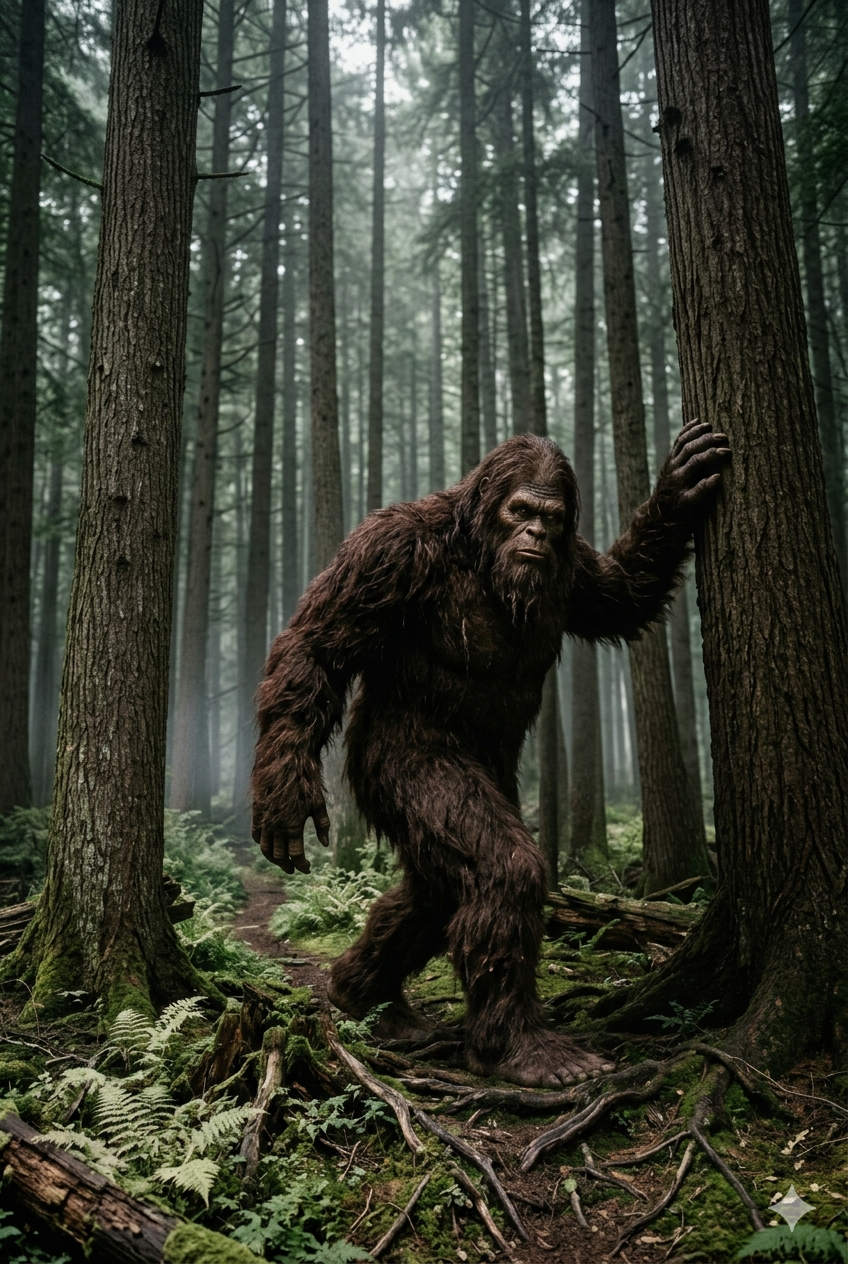
The most enduring mystery of the North American wilderness, Bigfoot is described as a massive, bipedal primate covered in a thick coat of dark hair. While science classifies it as a cryptid, the legend is deeply woven into the cultural fabric of the Allegheny Plateau, where it is viewed by many as a reclusive, undiscovered Great Ape suited for the rugged terrain of the Eastern United States.
Habitat in the ANF
The Allegheny National Forest is widely considered a "hotspot" for sightings, particularly in the remote, steep ravines and vast tracts of roadless timber. Believers suggest that the ANF provides the perfect sanctuary: an abundance of fresh water, dense coniferous cover for concealment, and a high population of white-tailed deer to serve as a primary food source. Sightings are most frequently reported in the deep woods surrounding the Tionesta Scenic Area and the more isolated stretches of the North Country Trail.
Ecology and Behavior
In regional lore, Bigfoot is described as a highly intelligent, nocturnal, and elusive omnivore. Reported behaviors include "wood knocking" (striking trees with branches to communicate) and a distinctive, high-pitched vocalization known as the "Sierras-style" howl. Unlike most forest animals, Bigfoot is said to be "bi-pedal," walking with a fluid, heavy-set gait that allows it to traverse rocky inclines and fallen timber with ease.
Identification
The Size: Typically described as standing between 7 and 9 feet tall, with a massive, barrel-chested build and no visible neck.
The Hair: Descriptions vary from jet black to reddish-brown or "cinnamon," often appearing matted or shaggy with bits of forest debris.
The Track: The most famous evidence is the footprint—five-toed, flat-footed, and measuring anywhere from 14 to 18 inches in length.
Sexual Dimorphism: Lore often describes males as significantly larger and more aggressive, while females are reported as being slightly smaller with more slender frames.
The most enduring mystery of the North American wilderness, Bigfoot is described as a massive, bipedal primate covered in a thick coat of dark hair. While science classifies it as a cryptid, the legend is deeply woven into the cultural fabric of the Allegheny Plateau, where it is viewed by many as a reclusive, undiscovered Great Ape suited for the rugged terrain of the Eastern United States.
Habitat in the ANF
The Allegheny National Forest is widely considered a "hotspot" for sightings, particularly in the remote, steep ravines and vast tracts of roadless timber. Believers suggest that the ANF provides the perfect sanctuary: an abundance of fresh water, dense coniferous cover for concealment, and a high population of white-tailed deer to serve as a primary food source. Sightings are most frequently reported in the deep woods surrounding the Tionesta Scenic Area and the more isolated stretches of the North Country Trail.
Ecology and Behavior
In regional lore, Bigfoot is described as a highly intelligent, nocturnal, and elusive omnivore. Reported behaviors include "wood knocking" (striking trees with branches to communicate) and a distinctive, high-pitched vocalization known as the "Sierras-style" howl. Unlike most forest animals, Bigfoot is said to be "bi-pedal," walking with a fluid, heavy-set gait that allows it to traverse rocky inclines and fallen timber with ease.
Identification
The Size: Typically described as standing between 7 and 9 feet tall, with a massive, barrel-chested build and no visible neck.
The Hair: Descriptions vary from jet black to reddish-brown or "cinnamon," often appearing matted or shaggy with bits of forest debris.
The Track: The most famous evidence is the footprint—five-toed, flat-footed, and measuring anywhere from 14 to 18 inches in length.
Sexual Dimorphism: Lore often describes males as significantly larger and more aggressive, while females are reported as being slightly smaller with more slender frames.