Switchgrass
(Panicum virgatum)
Species Description
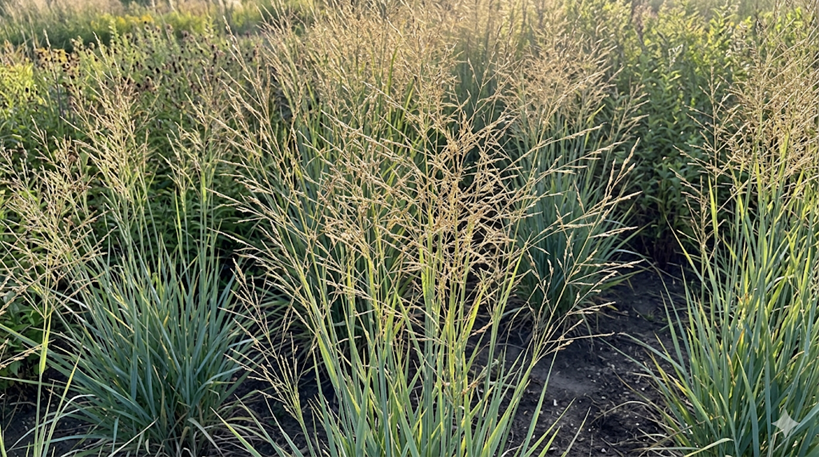
Description:The most versatile member of the "Big Four" tallgrasses, Switchgrass is a sturdy, deep-rooted perennial that acts as the "anchor" of the prairie. It is a warm-season grass that grows in large, airy clumps, known for its delicate, misty flower panicles that look like purple-tinted clouds hovering above the foliage. Habitat in the ANFIn the Allegheny National Forest, Switchgrass is a true generalist. While it was a titan of the central prairies, in Pennsylvania it thrives in riparian zones, sunny forest edges, and disturbed sites. You will find it along the shores of the Allegheny Reservoir, in high-elevation meadows, and even in brackish or sandy marshes. It is often the first grass planted in the ANF for soil stabilization after road construction or logging because its roots are legendary for holding the earth together.Ecology and the Energy of the FutureSwitchgrass is an ecological powerhouse. Its dense, upright stalks provide critical winter escape cover for pheasants, turkeys, and rabbits, as it stays standing even under heavy snow. It is also a larval host for several butterflies, including the Hobomok Skipper and the Delaware Skipper. Beyond its role in the food web, Switchgrass is at the center of modern renewable energy research; because it can grow on "marginal" land (soil too poor for food crops) and produces massive amounts of biomass, it is a leading candidate for cellulosic ethanol production. IdentificationThe "Hairy Armpit": The most definitive field mark for Switchgrass is at the ligule (where the leaf blade meets the stem). If you pull the leaf back, you will see a distinct, prominent tuft of white hairs. The Panicle: The flower head is a large, open, and highly branched spray (up to 20 inches long). In late summer, these branches are tipped with tiny, teardrop-shaped seeds that often have a reddish or purplish cast. The Leaves: The foliage is flat and straight, usually a vibrant green to bluish-green, with a very prominent central vein (midrib). The Roots: While you can't see them, the roots are a key part of its identity—they can reach depths of over 10 feet, making the plant nearly immune to drought once established.